آموزش مدل سازی هیدرودینامیکی و کیفی منابع آب سطحی با مدل CE-QUAL-W2

فرادرس: "مدل CE-QUAL-W2 یک مدل دو بعدی (افقی و عمودی) هیدرودینامیک و کیفیت آب است که می تواند پیکره هایی نظیر رودخانه های عمیق، مخزن سد و دریاچه و خورها را مدل کند. این مدل بر اساس حل معادلات غیر دائمی (Unsteady) دو بعدی هیدرودینامیک و پخش انتقال (Advection Dispersion) کار می کند.این نرم افزار قابلیت پیش بینی رفتار اکوسیستم های آبی از جمله مخازن سد به وسیله شبیه سازی ریاضی را دارد و امروزه به صورت گسترده ای برای شبیه سازی لایه بندی حرارتی و تغذیه گرایی مخازن، دریاچه ها، مصب ها و رودخانه های عمیق استفاده می شود."

آموزش این مدل به زودی از طریق فرادرس ارایه خواهد شد. برای دانلود آن می توانید بر روی لینک زیر کلیک نمایید:

CE-QUAL-W2

مدل بارش رواناب

در این پست مدلی نوشته شده تحت R تشریح می گردد که برای شبیه سازی فرایند بارش رواناب استفاده می گردد. مدل مبتنی بر یک رابطه رگرسیونی خطی چند گانه می باشد که پارامترهای آن با استفاده از pso تعدیل می شود. در مدل حاضر داده ها در یک فایل متنی شامل ورودی ها (ستون دوم الی ستون بیست هفتم  مربوط به بارش 26 ایستگاه باران سنجی) و ستون اول مربوط به رواناب تولیدی در ایستگاه مورد مطالعه می باشد. دوستان می توانند مدل را با حالات و وضعیت های مختلف دلبخواه و ورودی دیگر نیز  تغییر دهند.

موفق باشید

عرب زاده


دانلود

R resources for Hydrologists

R is my statistical software of election. A list of introductory material is here.

A nice series of video tutorial on R was just posted by the Google Developers Group, on youTube,here.


Recently many resources were added for hydrologists, which I list below with a little comment.


  • RWater: A Cyber-enabled Data-driven Tool for Enhancing Hydrology Education
  • HydroGOF and HydroTSM by Mauricio Zambrano-Bigiarini.  The first provides functions implementing both statistical and graphical goodnes-of-fit measures between observed and simulated values, mainly oriented to be used during the calibration, validation, and application of hydrological models. The second provides functions for management, analysis, interpolation and plotting of time series used in hydrology and related environmental sciences.  Mauricio also had a poster at EGU 2010 general assembly on the topic.
  • Jasper Vrugt's DREAM calibration method
  • RMWAGEN by Emanuele Cordano which is a weather generator, a package that contains functions for spatial multi-site stochastic generation of daily timeseries of temperature and precipitation. A presentation can be found here.
  • Other stochastic generators of precipitation can be found here. Do not forget to explore the links in that page, and particularly the presentations given at the Roscoff's Workshop on stochastic generators, where many examples are in R
  • The RHydro which included TOPMODEL (apparently not anymore supported), tools forDEM analysis (this last type of tools however are also available through the work by R. Bivand, E.J. Pebesma and V. Gomez-Rubio ), an implementation of the FUSE by Clark et al (2008) methodology, and many other tools for hydrological analysis. These were initially promoted by Wouter Buytaert and Dominik Reusser who also gave a nice tutorial at EGU a few years ago.
  • Hydromad: It provides a modelling framework for environmental hydrology: water balance accounting and flow routing in spatially aggregated catchments. It supports simulation, estimation, assessment and visualisation of flow response to time series of rainfall and other drivers
  • TUWmodel  is a lumped conceptual rainfall-runoff model, following the structure of the HBV model. The model runs on a daily time step and consists of a snow routine, a soil moisture routine and a flow routing routine. See Parajka, J., R. Merz, G. Bloeschl (2007) Uncertainty and multiple objective calibration in regional water balance modelling: case study in 320 Austrian catchments, Hydrological Processes, 21, 435-446
  • Sean Turner's and Stefano Galelli's, reservoir package, Tools for Analysis, Design, and Operation of Water Supply Storages
  • Code: Handy routines for Hydrologists by Dan Moore and others.
  • Hydrosanity: It provides a graphical user interface for exploring hydrological time series. It is designed to work with catchment surface hydrology data (mainly rainfall and streamflow time series at a set of locations). There are functions to import from a database or files; summarise and visualise the dataset in various ways; estimate areal rainfall; fill gaps in rainfall data; and estimate the rainfall-runoff relationship. Probably the most useful features are the interactive graphical displays of a spatial set of time series. (This project seems actually being abandoned). 
  • aqp: Algorithms for quantitative pedology. A collection of algorithms related to modeling of soil resources, soil classification, soil profile aggregation, and visualization by Dylan Beaudette and Pierre Roudier. A paper talking about it is given here. And a presentation is not missing.
  • A package for plotting soil water retention curves and hydraulic conductivity by Emanuele CordanoFabio Zottele and Daniele Andreis is soilwater.
  • soilDB, of the same authors of aqp, is useful to access some soil databases.
  • soiltexture: Functions for soil texture plot, classification and transformation by Jules Moeys
  • Hydrome: This package estimates the parameters in infiltration and water retention models by curve-fitting method.
  • SoilWater address to a couple of packages for estimating Soil Water Retention Curves and some Pedotransfer Functions
  • hydropso: This package implements a state-of-the-art version of the Particle Swarm Optimisation (PSO) algorithm, with a special focus on the calibration of environmental models.
  • Evapotranpiration: by Dan Lu Guo and Seth Westra. This package estimates Potential and Actual Evapotranspiration with multiple models (see also the paper here).
  • EcoHydRology developed by DR. FukaMT WalterJA Archibald,  TS Steenhuis, and ZM Easton which presents a community modeling foundation for Eco-Hydrology. 
  • Claudia Vitolo's Curve Number (Curve Number!) and other R stuff, including some tools for data discovery. Claudia also manages a Google+ group, R4Hydrology.
  • nsRFA:  this is collection of statistical tools for objective (non-supervised) applications of the Regional Frequency Analysis methods in hydrology made by Alberto Viglione. The package refers to the index-value method and, more precisely, helps the hydrologist to: (1) regionalize the index-value; (2) form homogeneous regions with similar growth curves; (3) fit distribution functions to the empirical regional growth curves. 
  • Wasim: Helpful tools for data processing and visualisation of results of the hydrological model WASIM-ETH.
  • Geotopbricks by Emanuele Cordano, analyses raster maps and other information as input/output files from the Hydrological Distributed Model GEOtop
  • hddtools by Claudia Vitolo is a tool for hydrological data discovery.
  • waterData is a USGS Package for Retrieval, Analysis, and Anomaly Calculation of Daily Hydrologic Time Series Data
  • Lmoments and Lmomco are two packages for the estimation of the L-moments of a distribution.
  • The SPEI R Package by Santiago Begueria which includes a set of functions for computing potential evapotranspiration and several widely used drought indices including the Standardized Precipitation-Evapotranspiration Index (SPEI). 
  • The USGS-R packages at github
  • Alessio Pugliese and Attilio Castellarin pREC: a package for the regionalisation of some hydrological variables.
  • Alberto Montanari version of Hymod: here.
  • Emanuele Cordano work in connecting R with JGrasstoolshere, to do geomorphological analysis (slides in Italian here, and in English here) within R.

Time series Analysis (among the many others):

  • The TSA package contains R functions and datasets detailed in the book "Time Series Analysis with Applications in R (second edition)" by Jonathan Cryer and Kung-Sik Chan

A miscellany of topics:

In R there are also many toolkit for the analysis of extreme events. The basic is:

but also:

can be useful.

Frankly I did not test them all: but usually CRAN packages are really good.


Finally, Mauricio Zambrano suggested also a series of other CRAN R packages that could be useful:


  • Geostatistics: gstat, automap, geoR, fields, RandomFields
  • GIS: spgrass6, RSAGA, rgdal, sp, proj4, raster, mapproj, maptools, RGoogleMaps, RArcInfo, RpyGeo,
  • Flood frequency: POT, evd, nsRFA, extremes, lmomco
  • Optimization: pso, DEoptim,
  • High Performance Computing: parallel, snowfall, multicore, jit, nws, Rmpi, snow,  taskPR
  • Spreadsheets & DB: RPostgreSQL, RMySQL, RSQLite, RNetCDF, RexcelInstaller, xlsReadWrite
  • Bayesian statistics: BAS, BLR, ensembleBMA, evdbayes, LearnBayes,
  • ramps, spBayes,...
  • Latex: xtable, Sweave
  • Wavelets: wavelets; wavethresh, wmtsa, Rwave
  • Data Mining: Rweka, rattle, party, RandomForest, ...
  • Machine Learning tools (in Java with R connection)

R for hydrology is a blog dedicated to activities related to hydrology performed by using R.


If you arrived here and you never used R, you can start from here.

Finally, you also would like to know why it is so hard to learn R. This blogpost clarify it, and also why I am using other languages for real model development.

برنامه حل مساله TSP


مساله فروشنده دوره گرد یا به اختصار (TSP) از جمله مسایل مهم در بهینه سازی است که از ایده آن می توان نگاشت های مختلف و تعابیر متعددی را در علوم مهندسی در نظر گرفت. مساله TSP عملا حل یک گراف همیلتنی بسته است که فرمولبندی و ارایه مدل آن توسط همیلتن در سال 1800 میلادی انجام گرفت. در رابطه با پیشینه این مساله و تاریخچه آن اطلاعات درستی در دسترس نمی باشد. مساله TSP از جمله مسایل NP-Hard از نظر حل در علوم کامپیوتر است که در این مطلب برنامه  این مساله تحت زبان R نوشته شده که به پیوست می باشد. نمونه ای از نتیجه حل مساله  در شکل زیر برای حالت 15 شهری آورده شده است.برای برای اطلاعات بیشتر در رابطه با مساله TSP می توانید به لینک زیر مراجعه نمایید:

http://en.wikipedia.org/wiki/Travelling_salesman_problem

TSP

دانلود TSP


بهره برداری بهینه از سامانه مخازن


سلام

در این پست برنامه بهره برداری از مخزن سد آیدوغموش را نوشته ام که به صورت تک هدفه اقدام به بهینه سازی و برنامه ریزی جریان خروجی از مخزن نموده و تعدادی گزارش را در اختیارتان قرار می دهد. این برنامه می تواند به دوستانی که در زمینه برنامه ریزی منابع آب فعالیت می نمایند کمک کند. برنامه نوشته شده تحت زبان R می باشد. لذا لازم است این برنامه را از طریق لینک زیر نصب نموده و سپس کتابخانه الگوریتم GA را که به عنوان بهینه ساز انتخاب شده است را بر روی آن سوار نمایید (فایل کتابخانه به پیوست داده ها و برنامه می باشد). از همین برنامه می توانید برای بهره برداری مخازن سایر سد ها نیز استفاده نمایید. ذکر چند نکته زیر برای استفاده از این برنامه برای سایر مخازن حایز اهمیت است:

1- ستون اول داده ها را به داده های آبدهی (MCM) اختصاص دهید

2- ستون دوم داده ها را به داده های تقاضا (MCM) اختصاص دهید 

3- ستون سوم داده ها را به داده های تبخیر (mm) اختصاص دهید

4- ضرایب معادله حجم سطح را در داخل برنامه برای مخزن مورد نظر وارد کنید (a، b) همچنین حجم حداقل و حداکثر مخزن را نیز تنظیم نمایید (Smax و Smin)

5- کتابخانه GA را از طریق منوی packages و گزینه install packages from local zip files نصب نمایید.

6- برنامه را در محیط R کپی کرده. سپس برنامه از شما فایل مربوط به داده ها را تقاضا می کند. فایل را به برنامه معرفی کرده و منتظر بمانید تا فرایند بهینه سازی انجام شده و نتایج نمایش داده شود.

موفق باشید


دانلود R

دانلود برنامه بهره برداری از مخزن


آموزش کاربردی مدل سازی هیدرولوژیکی حوضه آبریز در HEC-HMS

آموزش کاربردی مدل سازی هیدرولوژیکی حوضه آبریز در HEC-HMS


Online education at TU Delft

The university has taken an important step forward in making university education more accessible by providing the option of receiving education online. Over the coming academic year, the Faculty of Civil Engineering and Geosciences will be providing a broad range of online water courses. Alongside three Massive Open Online Courses (MOOCs) on the international edX-platform this range also consists of an online Water Management master track.


Introduction to Water and Climate

The basic elements of and the relation between water and climate are highlighted and further discussed together with their mutual coherence.

Starts 26 August 2014

Introduction to Drinking Water Treatment

Learn about urban water services, focusing on conventional technologies for drinking water treatment


Starts
28 October 2014

Introduction to The Treatment of Urban Sewage

Learn about urban water services, focusing on basic sewage treatment technologies.


Starts
January 2015


MOOCs

A MOOC is an online course aiming at large-scale interactive participation and open access via the web. In addition to traditional course materials such as videos, readings, and problem sets, MOOCs provide interactive user forums that help build a community for the students, professors, and teaching assistants.


edX

edX is a non-profit platform for online education through which MIT, Harvard and others, make a range of courses accessible to anyone, anywhere in the world, who has access to internet. The free courses are open to everyone, without prior education or entry examination.

Costs

The MOOCs are free to everyone with no prior education requirements or entry exams.

Water XSeries

The faculty of Civil Engineering and Geosciences offers an XSeries Certificate when you complete and pass the three courses.


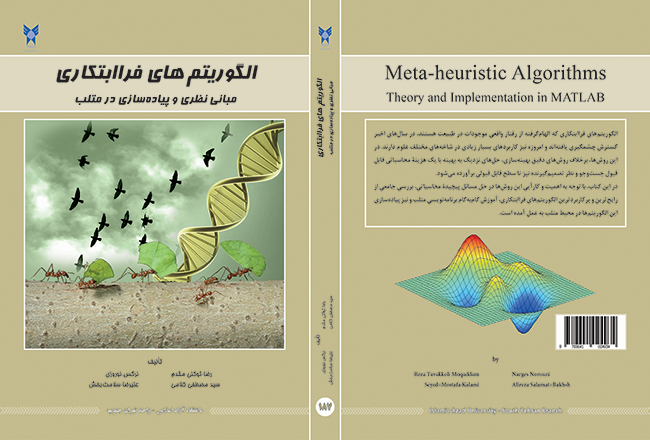
الگوریتم های فراابتکاری ، مبانی نظری و پیاده سازی در متلب


معرفی کتاب: الگوریتم های فرا ابتکاری -- مبانی نظری و پیاده سازی در متلب


اخیرا انتشارات دانشگاه آزاد (واحد تهران جنوب)، کتابی به نام «الگوریتم های فرا ابتکاری — مبانی نظری و پیاده سازی در متلب» را منتشر نموده است، که حاوی مطالب آموزشی جامعی در زمینه بهینه سازی، متاهیورستیک ها و مبانی تئوری و عملی این مباحث است. در این کتاب در کنار مروری که بر روش های بهینه سازی انجام شده است، هشت الگوریتم بهینه سازی هوشمند (متاهیوریستیک) مورد بررسی واقع شده اند. همچنین در بخش پایانی کتاب، آموزش نرم افزار متلب و همچنین کدهای متلب مربوط به الگوریتم های مورد بحث در این کتاب، گنجانده شده اند.

فهرست مطالب مندرج در این کتاب در ادامه آمده اند:

  • فصل یکم: مروری بر مبانی و روش های بهینه سازی
  • فصل دوم: شبیه سازی تبرید یا Simulated Annealing (به اختصار SA)
  • فصل سوم: جستجوی ممنوع یا Tabu Search (به اختصار TS)
  • فصل چهارم: الگوریتم ژنتیک یا Genetit Algorithm (به اختصار GA)
  • فصل پنجم: بهینه سازی کلونی مورچگان یا Ant Colony Optimization (به اختصار ACO)
  • فصل ششم: بهینه سازی انبوه ذرات یا Particle Swarm Optimization (به اختصار PSO)
  • فصل هفتم: تکامل تفاضلی یا Differential Evolution (به اختصار DE)
  • فصل هشتم: الگوریتم رقابت استعماری یا Imperialist Competitive Algorithm (به اختصار ICA)
  • فصل نهم: استراتژی تکامل یا Evolution Strategy (به اختصار ES)
  • پیوست الف: آشنایی با نرم افزار متلب (MATLAB)
  • پیوست ب: کد متلب الگوریتم های مورد بحث در این کتاب


یکی از نویسندگان این کتاب، آقای سیدمصطفی کلامی هریس است که بیش از ۲۵۰ ساعت برنامه آموزشی تخصصی در زمینه سیستم های هوشمند و برنامه نویسی توسط ایشان در فرادرس (متلب سایت) ارائه شده است.


قطعا استفاده از این کتاب، می تواند یکی از سریع ترین روش های موجود برای کسب دانش در زمینه الگوریتم های فرا ابتکاری باشد، و این کتاب می تواند مرجع مناسبی برای دانشجویان و دانشپژوهان رشته های مختلف باشد. همچنین، اساتید محترم می توانند این کتاب را به عنوان یک مرجع آموزشی مناسب در درس هایی مانند بهینه سازی، متاهیوریستیک ها، محاسبات هوشمند، هوش محاسباتی و محاسبات طبیعی، به دانشجویان خود معرفی نمایند.


مشخصات کامل این کتاب ارزشمند در ادامه آمده است:

عنوان: الگوریتم های فرا ابتکاری — مبانی نظری و پیاده سازی در متلب

نویسندگان:

  • پرفسور رضا توکلی مقدم (استاد دانشکده مهندسی صنایع، دانشگاه تهران)
  • سیدمصطفی کلامی هریس (دانشجوی دکترای مهندسی برق، دانشگاه خواجه نصیرالدین طوسی)
  • نرگس نوروزی (دانشجوی دکترای مهندسی صنایع، دانشگاه تهران)
  • علیرضا سلامت بخش (دانشجوی دکترای مهندسی صنایع، دانشگاه آزاد، واحد علوم و تحقیقات تهران)

ناشر: انتشارات دانشگاه آزاد، واحد تهران جنوب

تعداد صفحات: ۳۲۸ صفحه

سال انتشار: ۱۳۹۲

قیمت : 16000 تومان

تماس: 02188312276


WWW.MATLABSITE.COM

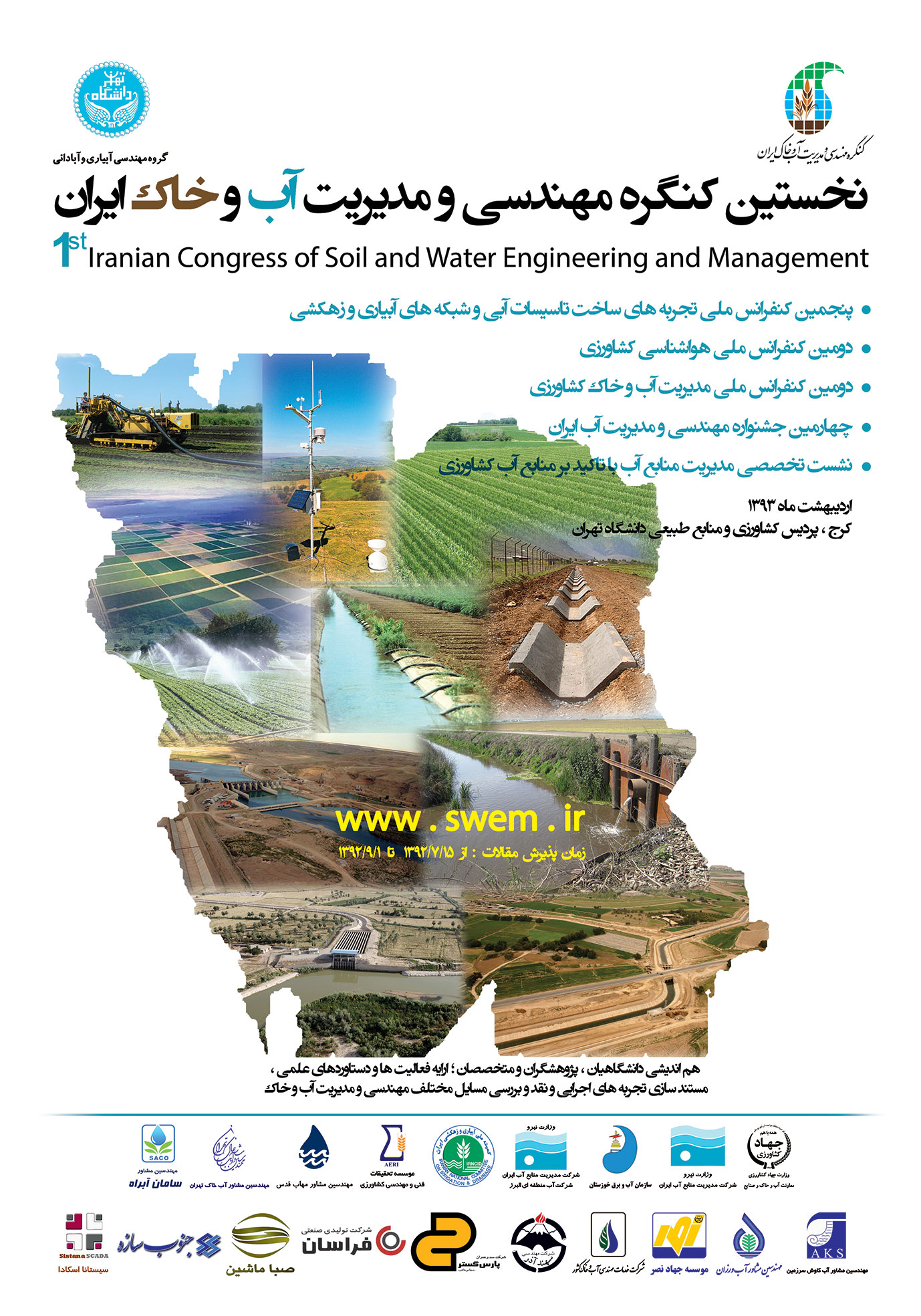
نخستین کنگره مهندسی و مدیریت آب و خاک ایران

تقویم برگزاری :
 
زمان برگزاری : 29 و 30 اردیبهشت 1393
محل برگزاری : کرج – پردیس کشاورزی و منابع طبیعی دانشگاه تهران - گروه مهندسی آبیاری و آبادانی
آخرین مهلت دریافت مقالات : 1392/12/10
زمان اعلام نتایج داوری : 1393/02/01
آخرین زمان دریافت مقالات پذیرفته شده و اصلاح شده : 1393/02/10
آخرین زمان ثبت نام : 1393/02/15
 

http://www.swem.ir/


جواب تشریحی کنکور کارشناسی ارشد رشته منابع آب 1392-حسین دهبان ، مجید جوانمرد

جواب تشریحی دستنویس کنکور کارشناسی ارشد رشته

 مهندسی منابع آب ، ۱۳۹۲


نویسندگان :

حسین دهبان ، رتبه ۱ ارشد منابع آب ۹۲

مجید جوانمرد ، رتبه ۱۰ ارشد منابع آب ۹۲


لینک دانلود

آموزش نرم افزار R

نرم افزار R از جمله نرم افزار هایی آماری کد باز است ، که توانایی تجزیه و تحلیل قدرتمند  داده های آماری را می باشد. فایل های زیر توسط دکتر ندوشنی از اعضای هیات علمی گروه عمران دانشگاه صنعت آب و برق عباسپور تهیه شده است که چگونگی کار رو با این نرم افزار توضیح می دهد.

آشنایی با زبان محاسبات آماری R-نسخه‌ی 1.8.0(پاییز 91)

مباحث ویژه در R- نسخه‌ی 1.0.0(پاییز 91)


Saint Leo University Library Access  

User : refhelp

Pass : saintleo


Sciencedirect

Logout

الگوریتم PSO

ايده Particle Swarm Optimization، براي اولين بار توسط کندي و ابرهارت در سال 1995 مطرح شد. PSO، يک الگوريتم محاسبه اي تکاملي الهام گرفته از طبيعت و براساس تکرار مي‌باشد. منبع الهام اين الگوريتم، رفتار اجتماعي حيوانات، همانند حرکت دسته جمعي پرندگان و ماهي‌ها بود. از اين جهت که PSO نيز با يک ماتريس جمعيت تصادفي اوليه، شروع مي‌شود، شبيه بسیاری دیگر از الگوریتم های تکاملی همچون الگوريتم ژنتيک پيوسته و الگوریتم رقابت استعماری است. برخلاف الگوریتم ژنتیک ، PSO هيچ عملگر تکاملي همانند جهش و تزويج ندارد. از این جهت می شود گفت که الگوریتم رقابت استعماری شباهت بیشتری به PSO دارد تا به GA. هر عنصر جمعيت، يک ذره ناميده مي‌شود (که همان معادل کروموزوم در GA و یا کشور در الگوریتم رقابت استعماری) است. در واقع الگوريتم PSO از تعداد مشخصي از ذرات تشکيل مي-شود که به طور تصادفي، مقدار اوليه مي گيرند. براي هر ذره دو مقدار وضعيت و سرعت، تعريف مي شود که به ترتيب با يک بردار مکان و يک بردار سرعت، مدل مي‌شوند. اين ذرات، بصورت تکرارشونده اي در فضاي n‌ـ‌بعدي مسئله حرکت مي کنند تا با محاسبة مقدار بهينگي به عنوان يک ملاک سنجش، گزينه‌هاي ممکن جديد را جستجو کنند. بُعد فضاي مسئله، برابر تعداد پارامترهاي موجود در تابع مورد نظر براي بهينه سازي مي باشد. يک حافظه به ذخيرة بهترين موقعيت هر ذره در گذشته و يک حافظه به ذخيرة بهترين موقعيت پيش آمده در ميان همة ذرات، اختصاص مي‌يابد. با تجربة حاصل از اين حافظه ها, ذرات تصميم مي گيرند که در نوبت بعدي، چگونه حرکت کنند. در هر بار تکرار، همة ذرات در فضاي nـ‌بعدي مسئله حرکت مي¬کنند تا بالاخره نقطة بهينة عام، پيدا شود.


فیلم الگوریتم pso

DOWNLOAD PART 01

DOWNLOAD PART 02

PART 03DOWNLOAD

DOWNLOAD PART 04

DOWNLOAD PART 05

پسورد : www.tcneee.ir

همایش ملی مهندسی عمران کاربردی و دستاوردهای نوین

وبسایت

پنجمين كنفرانس مديريت منابع آب ايران

وبسایت